Body: Security is a big focus for Microsoft, especially with Office 365; their enterprise-class data centers are some of the most secure in the world. Above and beyond data center security, Microsoft has implemented technologies that allow organizations to further secure their data, even from Microsoft themselves. One way this is done is with Rights Management Services, or RMS. The mile high explanation for RMS is that it “provides…
Read MoreReleased: Exchange 2013 Server Role Requirements Calculator Update v6.1
Body: What’s new with Exchange 2013 Server Role Requirements Calculator V6.1 Version 6.1 Fixed operator mistake in calcNumActiveDBsSF formula Fixed missed validation scenario where the calculator could recommend a copy count that could not be deployed on the custom disk architecture Optimized remaining servers formula Fixed an issue where single datacenter, multiple databases per volume architecture with lagged copies didn’t calculate the correct number of copies/volume Fixed VirtCPUFactor reference Various…
Read MoreExchange Online Mail Protection Reports
Body: Aside from the great reporting options available directly within the Office 365 portal, there is also an Excel add-in that allows administrators to download information directly in to Excel for data manipulation. Obviously once the data is in Excel, then all of the various options with Office also exist, such as exporting to Word, PowerPoint, etc. and choosing which charts are appropriate for different organizations. The Mail…
Read MoreHow Microsoft Does Windows Azure Active Directory PowerShell
Body: It seems like “The Cloud” is all we hear about these days, and it’s often capitalized as if it were a single monolithic thing. But it’s not a single entity. There are many clouds, including the Windows Azure Active Directory (WAAD) cloud and Microsoft Office 365 cloud, both of which offer a vast array of services. You can use the services to augment your on-premises capabilities, or…
Read MoreHow Microsoft Does Windows Azure Active Directory PowerShell
Body: It seems like “The Cloud” is all we hear about these days, and it’s often capitalized as if it were a single monolithic thing. But it’s not a single entity. There are many clouds, including the Windows Azure Active Directory (WAAD) cloud and Microsoft Office 365 cloud, both of which offer a vast array of services. You can use the services to augment your on-premises capabilities, or…
Read MoreExchange Server 2013 Cumulative Update 3 (CU3) disponível!!
Body: O Exchange Server 2013 CU3 já está disponível para download no site da Microsoft, segue o link: http://www.microsoft.com/en-us/download/details.aspx?id=41175 Cumulative Update 3 for Exchange Server 2013 (KB2892464) Alguns detalhes importantes sobre o CU3: Caso você esteja instalando Exhange Server 2013 do zero já pode começar com o CU3, não é necessário instalar uma versão anterior e depois o CU3 porque o mesmo é o pacote completo do Exchange Server 2013…
Read MoreIntroducing Office 365 Message Encryption: Send encrypted emails to anyone!
Body: We’re pleased to announce the upcoming release of Office 365 Message Encryption, a new service that lets you send encrypted emails to people outside your company. No matter what the destination-Outlook.com, Yahoo, Gmail, Exchange Server, Lotus Notes, GroupWise, Squirrel Mail, you name it-you can send sensitive business communications with an additional level of protection against unauthorized access. There are many business situations where this type of encryption is…
Read MoreExchange Server 2013 Service Pack 1 Announced
Body: The Microsoft Exchange Server team has announced the upcoming availability of Service Pack 1 for Exchange Server 2013, scheduled for release in “early 2014″. Among the changes and improvements planned for Service Pack 1: Support for running Exchange Server 2013 on Windows Server 2012 R2 The return of the Edge Transport server role S/MIME support for Outlook Web App Many more fixes and improvements The team also said…
Read MoreCritical Office 365 External Sharing Security Gotcha
Body: In an Office 365 Tenant, you must be careful with External Sharing in a few different scenarios: 1) If your organization has migrated from an existing on premise Farm in which you used “NT AuthorityAuthenticated Users” to grant permissions 2) If your organization is making use of External sharing via “Everyone” (including external users) in Office 365 If your organization’s Office 365 Admin has allowed External Sharing for Authenticated…
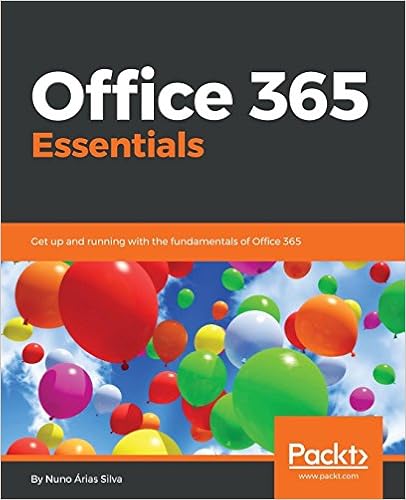
Read MoreOffice 365 Essentials Book
 Nuno Árias Silva Website
- Weekly digest: Office 365 changes – 21 to 25 September News #Office365 #486 28/09/2026
- Weekly digest: Office 365 changes – 14 to 19 September News #Office365 #485 21/09/2026
- Weekly digest: Office 365 changes – 7 to 11 September News #Office365 #484 17/09/2026
- Weekly digest: Office 365 changes – 31 August to 4 September News #Office365 #483 14/09/2026
- Weekly digest: Office 365 changes – 24 to 28 August News #Office365 #482 10/09/2026