The Exchange 2007 will end of Life on April 11, 2017. Microsoft has recently published a new resource to help you with your upgrade from Exchange Server 2007 to Office 365 or Exchange Server 2016. “Exchange 2007 End of Life Roadmap” helps you decide what migration path makes sense for your organization and it links you directly to the step-by-step information you’ll need to complete the phases of the process. The best…
Read MoreDirSync and Azure AD Sync end of support on April 13, 2017
At April 13 the support of DirSync and Azure AD Sync will be ending. Microsoft previously has offered two synchronization tools for hybrid identity implementation to extend the reach of on-premises identities to cloud services: Windows Azure Active Directory Sync (DirSync) for single forest directory implementations Microsoft Azure Active Directory Sync (Azure AD Sync) for multi-forest and other advanced capabilities. Azure Active Directory (Azure AD) Connect now replaces these older…
Read MoreNew Identity Synchronization Feature Being Enabled – Duplicate Attribute Resiliency
Microsoft will release a new function to Office 365 and Azure Tenants. A new feature called Duplicate Attribute Resiliency is being introduced in order to eliminate friction caused by duplicate UserPrincipalName and ProxyAddress conflicts when running one of Microsoft’s synchronization tools. This new feature is being rolled out across all of Azure Active Directory, and will be enabled for your tenant on starting at April. The new behavior that this…
Read MoreSharePoint Framework GA !
Microsoft are happy to announce the SharePoint Framework is General Availability. Microsoft SharePoint Framework is a new development model and set of tools to build on top of Microsoft SharePoint, a content management and collaboration platform. SharePoint Framework is mobile-first and cloud-enabled, so it works as well with SharePoint Online, Office Graph and other parts of the Office 365 business productivity suite. The SharePoint Framework enables application developers to create…
Read MoreWeekly digest: Office 365 changes – From 30 January to 3 February
This is the third email that Microsoft has sent to Tenant Admin’s his Newsletter with Office 365 changes. This Weekly digest is intended to reach the Administrators of Office 365 within the latest changes that are happening to Office 365. Bellow are an example that can be applied to your tenant, because this email’s are based on the services that you have in your Tenant and subscription. Note: My Tenant is…
Read MoreWeekly digest: Office 365 changes – From 24 to 28 January
This is the second email that Microsoft has sent to Tenant Admin’s his Newsletter with Office 365 changes. This Weekly digest is intended to reach the Administrators of Office 365 within the latest changes that are happening to Office 365. Bellow are an example that can be applied to your tenant, because this email’s are based on the services that you have in your Tenant and subscription. You…
Read MoreLaunch of Weekly digest: Office 365 changes
Today Microsoft has sent to Tenant Admin’s his first Newsletter with Office 365 changes. This Weekly digest is intended to reach the Administrators of Office 365 within the latest changes that are happening to Office 365. Bellow are an example that can be applied to your tenant, because this emai’s are based on the services that you have in your Tenant and subscription. You have 8 new Office…
Read MoreNew Feature: Focused Inbox
Microsoft has released a new feature called “Focused Inbox” the change of Clutter. It has announced at the Office 365 Admin Portal. Here is the message: New Feature: Focused Inbox MC81565 Published On : January 7, 2017 Expires On : May 30, 2017 Focused Inbox is a new feature coming to Office 365. Focused Inbox helps you take control of your inbox and focus on the emails that matter most.…
Read MoreOffice 365 identity models
Microsoft has release a new video on Office 365 identities You can learn more in this video about the identity models. Watch this video for a quick overview of the different identity models. Office 365 uses the cloud-based user authentication service Azure Active Directory to manage users. You can choose from three main identity models in Office 365 when you set up and manage user accounts: Cloud identity. Manage your…
Read MoreOffice 365 Essentials Book
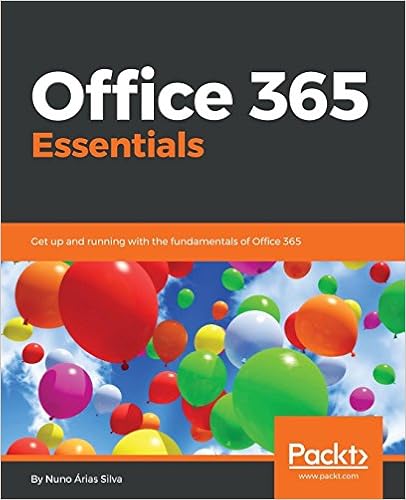
 Nuno Árias Silva Website
- Weekly digest: Office 365 changes – 9 to 13 March News #Office365 #458 16/03/2026
- Weekly digest: Office 365 changes – 2 to 6 March News #Office365 #457 09/03/2026
- Weekly digest: Office 365 changes – 23 to 28 February News #Office365 #456 02/03/2026
- Weekly digest: Office 365 changes – 16 to 20 February News #Office365 #455 23/02/2026
- Weekly digest: Office 365 changes – 9 to 13 February News #Office365 #454 16/02/2026